
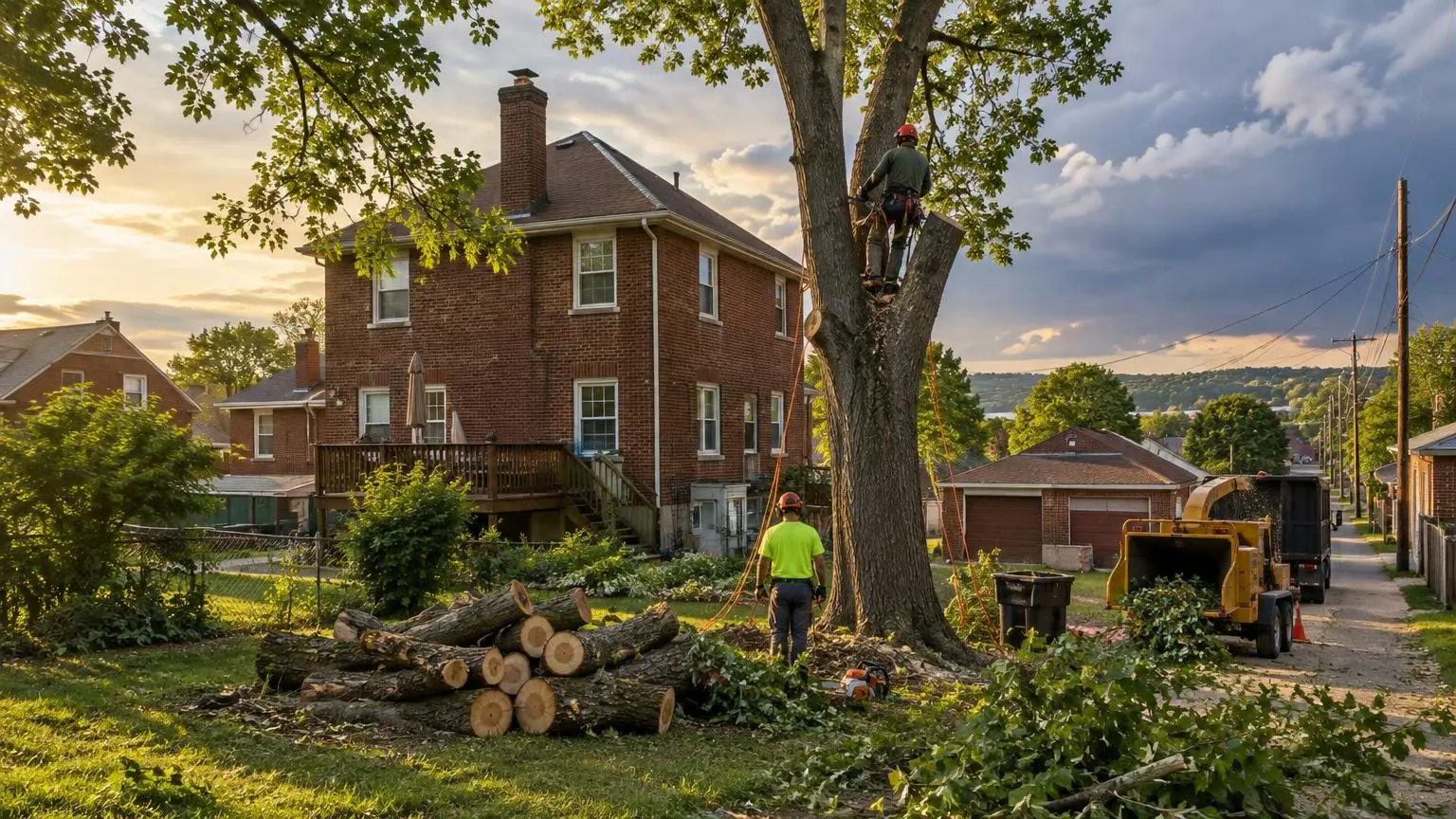
Emerald ash borer and dead trees
Dead & Ash Tree Removal in St. Louis, MO
Ash and other dying trees taken down while the wood still holds, with ash wood kept local.
- We come out and look before we price, anywhere in City of St. Louis and St. Louis County
- Each item on the estimate priced on its own
- We confirm where the wood goes before work begins
Ash Trees Are Running Out of Time
Dead and ash tree removal has been steady work in St. Louis since emerald ash borer was confirmed in Creve Coeur in August 2015. The beetle's larvae tunnel under the bark and cut off the tree's water and nutrient flow, and untreated ash trees eventually die. A dead tree of any species becomes harder to remove the longer it stands, because the wood dries, cracks and loses strength, so the cost and the risk both tend to rise with time.
How to tell if your ash is infested
The Missouri Department of Agriculture's management guide lists the signs: D-shaped exit holes about an eighth of an inch wide, winding S-shaped tunnels under loose bark, new sprouts along the trunk and branches, more woodpecker activity, and thinning leaves or dying branches at the top of the crown. Woodpeckers flaking off the outer bark often leave pale patches on the trunk that are easy to spot from the ground.
Treat or remove?
The same guide suggests treatment when the beetle is within 15 miles or in your county, which now describes the St. Louis area, but only for trees that are healthy, growing well and showing less than 50% dieback. Trees past that point are unlikely to recover even with treatment, and small trees or trees crowded against lines, houses or sidewalks are often not worth years of repeated treatments. For an ash you decide not to protect, the guide's advice is to remove it before it dies to save money, and to dispose of the wood locally so you do not spread the insect.
Rules in the city
The City of St. Louis Forestry Division says privately owned ash trees are the landowner's responsibility, and no permit is needed to remove or treat one. Under the city's tree ordinance, a private ash that dies or becomes hazardous can be treated as a nuisance, and the owner can receive a notice to remove it. Ash street trees in the tree lawn are city trees; the city has an interactive map showing which ones it plans to treat or remove, and residents can apply for a free Ash Permit to pay for treatment of the city ash next to their property.
Other dead and dying trees
Ash is the most common, but not the only one. Pin oaks in alkaline soil can decline from iron chlorosis, which shows as yellow leaves with green veins and later twig dieback. Old silver maples hollow out. Trees damaged in the 2025 tornado or later storms may die back over a few seasons. We look at each one and tell you whether it is a removal or something that can wait.
The Work Involved
Removal plans change once a tree has died, because the wood behaves differently.
EAB-killed ash removal
Ash taken down with lighter cuts and rigging suited to dry, brittle wood.
Declining tree checks
A look at canopy dieback and trunk signs to help you decide between treating and removing.
Hazard tree removal
Dead or structurally failing trees near houses, driveways and sidewalks removed first.
Local wood disposal
Ash wood chipped or kept on site as firewood so it does not travel and spread the beetle.
Replacement planning
Suggestions for what to plant instead, avoiding species prone to the same problem.
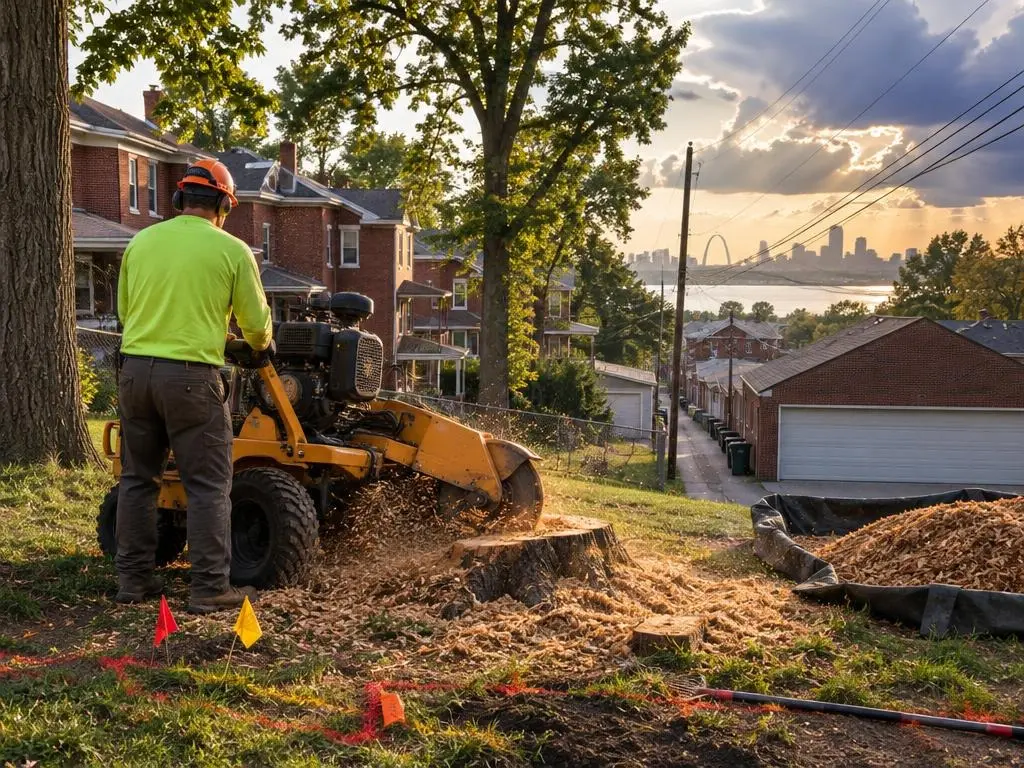
How Much Dead and Ash Tree Removal Runs
| Job | Published range |
|---|---|
| Ash tree removal, St. Louis (Angi) | $200 to $1,500 |
| Maple removal, St. Louis (Angi) | $200 to $1,650 |
| Oak removal, St. Louis (Angi) | $150 to $1,650 |
| Diseased tree with soft or breakable wood (Angi) | $400 to $900 |
| Tree 30 to 60 ft, St. Louis (Angi) | $350 to $1,000 |
Ranges from Angi's St. Louis and national tree removal guides (2026). Dead trees often cost more than live ones of the same size because of the extra care needed. Your written estimate is the price.
From Quote to Cleanup
1. Identify and assess
We confirm the species, look for EAB signs and judge how sound the wood is.
2. Recommend
If the tree is a reasonable candidate for treatment, we say so; if not, we explain why removal makes sense.
3. Quote
A written price that reflects the tree's condition and the rigging it needs.
4. Remove with care
Dead wood is cut in smaller pieces and lowered gently, from a lift or crane if it is too weak to climb.
5. Handle the wood locally
Ash is chipped or left as firewood on site, never moved far.
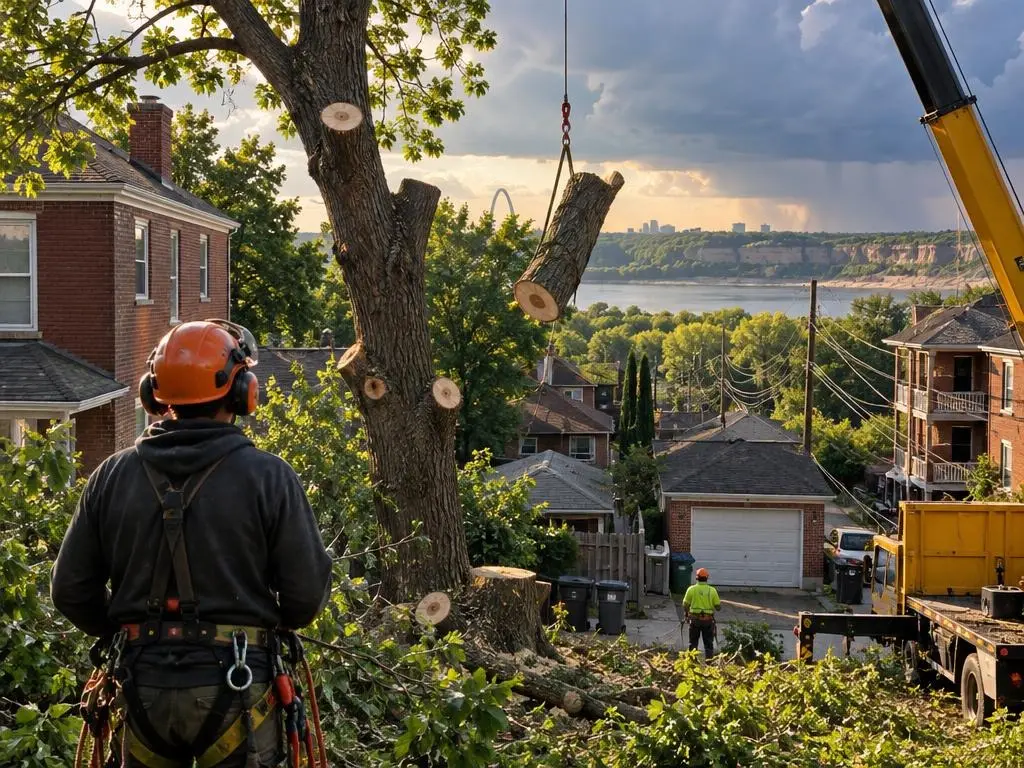
Why Choose Us for Dead & Ash Tree Removal
Honest treat-or-remove advice
Based on the state's criteria, not on which job is bigger.
Rigging for brittle wood
Smaller pieces and gentler lowering when a tree has been dead a while.
Ash stays local
Wood is handled so the beetle does not travel with it.
Dead & Ash Tree Removal Questions
Is my tree an ash?
Ash has compound leaves with usually five to nine leaflets, branches that grow in opposite pairs, and on older trees bark with a diamond-shaped pattern of ridges. The City of St. Louis has an identification guide for green and white ash, and we can confirm the species at the estimate.
How fast does an infested ash die?
It varies with how heavily the tree is infested and how healthy it was, but decline usually shows first at the top of the crown and spreads over a few years. Once more than half the canopy is dying back, the state's guidance is that treatment is unlikely to save it.
Can I keep the ash wood for firewood?
Yes, as long as it stays on your property or nearby. The state guide says to dispose of ash wood locally so the beetle does not spread. Burn it where it was cut.
The city ash in front of my house is marked. What does that mean?
The city's interactive ash street tree map shows whether a given tree is planned for treatment or removal. Forestry handles its own trees; you can apply for an Ash Permit if you want a city ash next to your property treated instead.
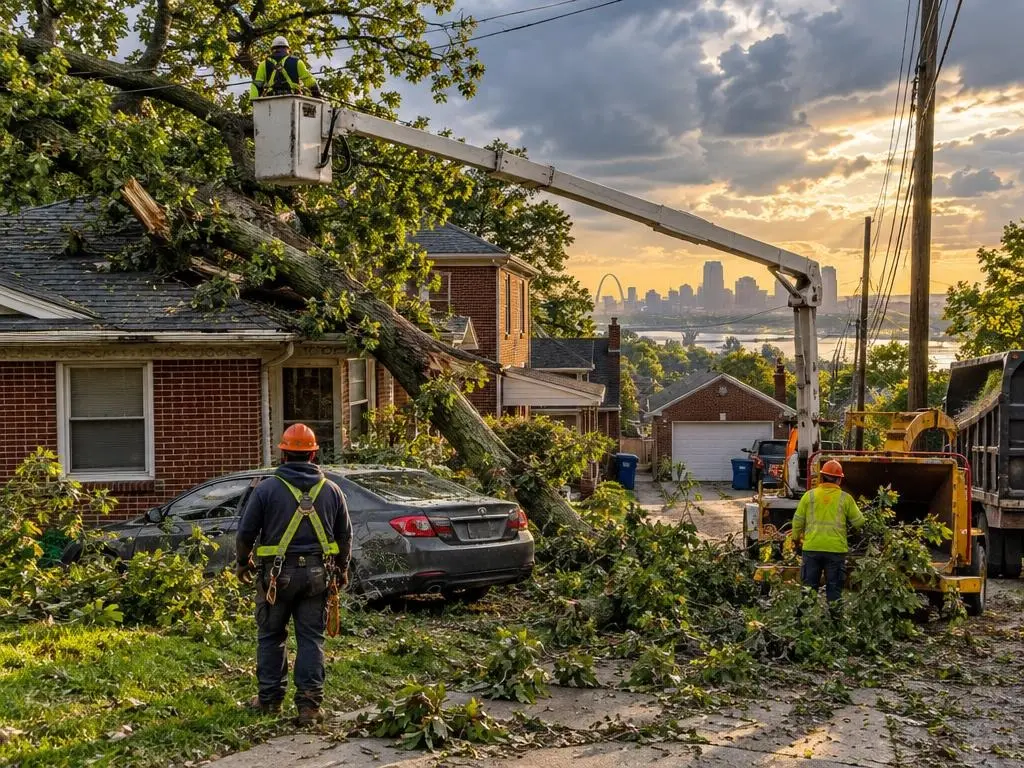
Dead & Ash Tree Removal Service Areas
- Tree Removal in St. Louis, MO
- Tree Removal in Kirkwood, MO
- Tree Removal in University City, MO
- Tree Removal in Clayton, MO
- Tree Removal in Webster Groves, MO
- Tree Removal in Ladue, MO
- Tree Removal in Chesterfield, MO
- Tree Removal in Ballwin, MO
- Tree Removal in Wildwood, MO
- Tree Removal in St. Peters, MO
- Tree Removal in Brentwood, MO
- Tree Removal in Richmond Heights, MO
- Tree Removal in Maplewood, MO
- Tree Removal in Glendale, MO
- Tree Removal in Creve Coeur, MO
- Tree Removal in Town and Country, MO
- Tree Removal in Sunset Hills, MO
- Tree Removal in Crestwood, MO
- Tree Removal in Des Peres, MO
- Tree Removal in Manchester, MO
- Tree Removal in Olivette, MO
- Tree Removal in Maryland Heights, MO
- Tree Removal in Bridgeton, MO
- Tree Removal in Florissant, MO
- Tree Removal in St. Charles, MO
- Tree Removal in O'Fallon, MO
- Tree Removal in Arnold, MO
- Tree Removal in Oakville, MO
- Tree Removal in Affton, MO
- Tree Removal in Edwardsville, IL
Get a Dead & Ash Tree Removal Estimate
If you are not sure whether your tree is an ash, or whether it is worth saving, we will look at it for free.