
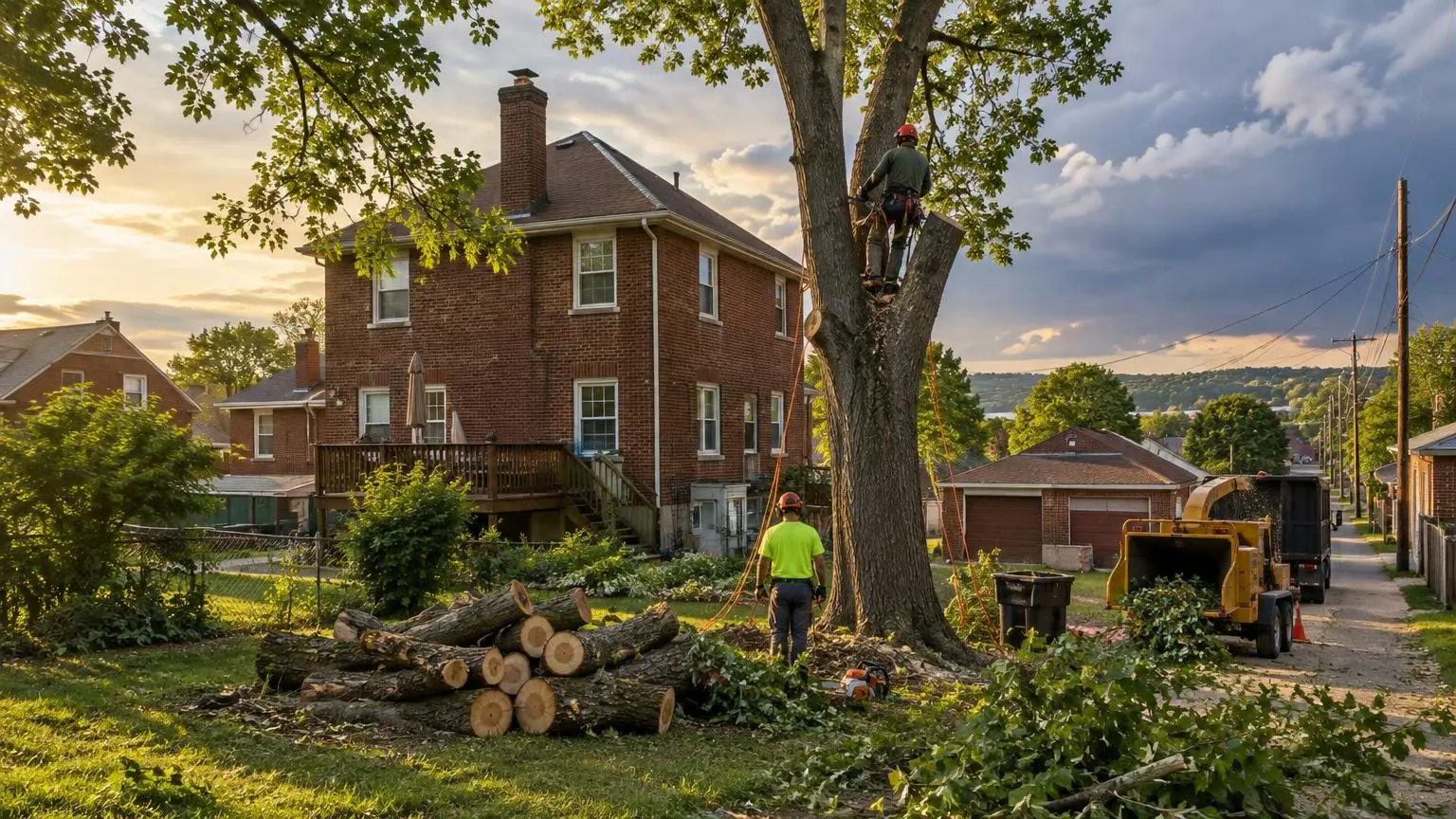
On the path of the 2011 Good Friday tornado
Tree Removal in Maryland Heights, MO
Storm cleanup, hazard trees and removals for homes near the Missouri River bottoms.
- We come out and look before we price, anywhere in City of St. Louis and St. Louis County
- Each item on the estimate priced on its own
- We confirm where the wood goes before work begins
Where the Good Friday Tornado Began Its Run
Tree Removal in Maryland Heights carries the memory of April 22, 2011. That evening, an EF4 tornado with estimated winds of 170 mph tracked 21.3 miles across north St. Louis County and into Illinois, and Maryland Heights was one of the communities in its path, along with Bridgeton, St. Ann, Berkeley, Ferguson and others. About 2,700 structures were damaged across the metro area. Many of the trees that came down that night were mature yard trees, and their loss reshaped how some neighborhoods look today.
A young city with a lot of land
Maryland Heights incorporated in 1985, making it one of the newer cities in St. Louis County. It covers about 21.9 square miles of land plus 1.5 square miles of water, and had 28,284 residents and 13,425 housing units at the 2020 census. That works out to about 610 homes per square mile, lower than many suburbs, partly because the city also takes in large open spaces such as Creve Coeur Lake Memorial Park with its 320-acre lake, the first county park in St. Louis County. Residential neighborhoods sit among all of that, with trees ranging from big oaks on older lots to trees planted when newer subdivisions went in.
Trees near the lake and the bottoms
Low ground near the lake and the Missouri River bottoms grows fast trees like cottonwoods, silver maples and box elders. They get big quickly, and they are prone to breaking. Cottonwoods in particular drop large limbs and can split in storms. If one of these is standing over a house or a driveway, it deserves a close look.
After a storm
When a storm hits, we work in this order: 1. Anything on the house, a car or blocking an exit 2. Limbs hung up overhead, which are the most dangerous to people on the ground 3. Fallen trees across driveways and yards 4. Damaged trees still standing that may fail later
If wires are down or a tree is touching a line, call Ameren first and stay away from it. Take photos of damage before cleanup if you plan to file an insurance claim.
Assessing storm-survivor trees
Trees that came through a major storm can carry hidden damage for years. Twisting winds crack trunks along the grain, tear roots on one side, and split branch unions high in the crown. Over time, those wounds can decay. If a tree on your property is a survivor of the 2011 tornado or a later storm, look for long vertical cracks, cavities, fungal growth at the base or on the trunk, and a crown that thins on one side. One of these is a reason for a closer look; several together usually point toward removal.
Planned removals
Not every job follows a storm. Many Maryland Heights calls are for dead ash, declining oaks, trees crowding a house, or trees that have outgrown a small yard. We visit, assess, and give you a written estimate. Call (314) 668-1571 or send the form. Get a free estimate
Maryland Heights Facts
- The 2011 tornado. The April 22, 2011 Good Friday tornado was rated EF4 with estimated winds of 170 mph. It tracked 21.3 miles with a path up to 880 yards wide through Maryland Heights, Bridgeton, St. Ann, Berkeley, Ferguson and other communities.
- Incorporated in 1985. Maryland Heights incorporated in 1985 and had 28,284 residents and 13,425 housing units at the 2020 census, on about 21.9 square miles of land and 1.5 square miles of water.
- Creve Coeur Lake. Creve Coeur Lake Memorial Park, operated by St. Louis County, features a 320-acre lake and was the first county park in St. Louis County. It lies within Maryland Heights.
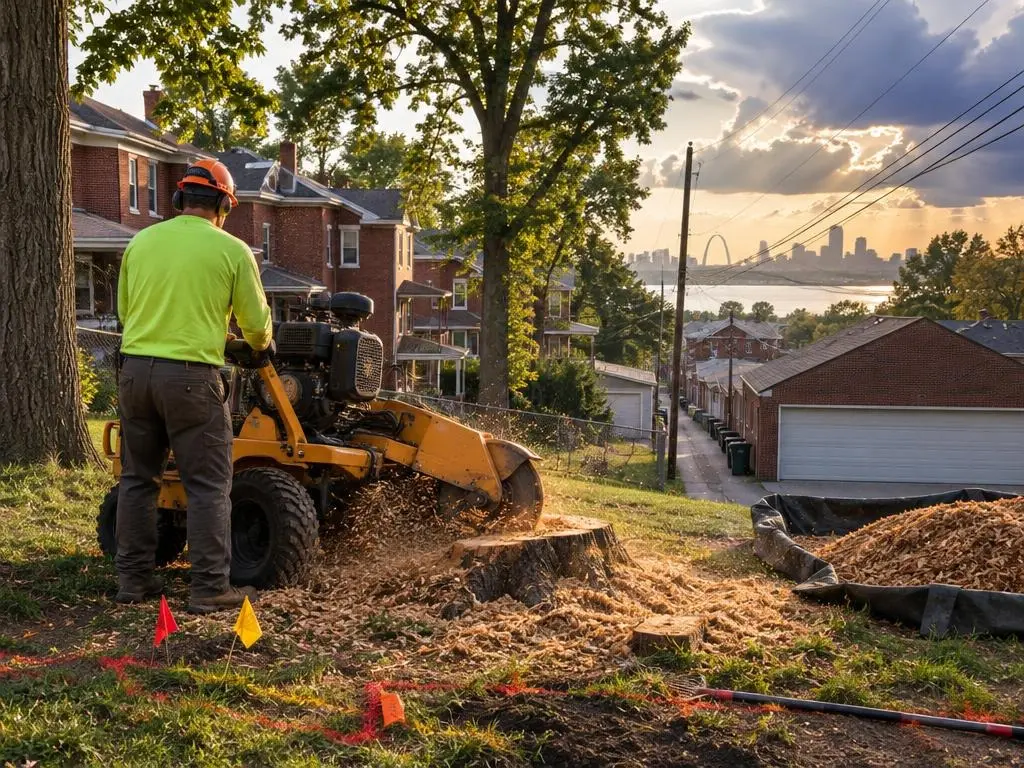
Our Services in Maryland Heights, MO
Maryland Heights Questions
We have a big cottonwood behind the house. Should it come down?
Not necessarily, but it should be checked. Cottonwoods grow fast and tall, and their wood is weak, so they are prone to dropping large limbs and splitting in storms. If one stands within reach of the house, have it assessed for deadwood, cracks and decay.
A tree fell on my house. What do I do?
Get everyone out of the affected rooms. If lines are down, call Ameren and stay clear. Take photos for your insurer. Then call (314) 668-1571. We remove the tree from the roof in controlled pieces to avoid causing more damage.
Can you remove a tree near the lake or a creek?
Yes. Soft ground near water often means we climb and rig the tree rather than bringing heavy equipment in. We plan the access with you before we start.
Is it safe to wait until spring to remove a dying tree?
If it is dying slowly and cannot reach the house, a driveway or a place where people gather, waiting a few months is usually fine. If it is dead, cracked, leaning or standing over something important, schedule it now. We can tell you which category it falls in.
Free Estimates in Maryland Heights, MO
Free estimates throughout Maryland Heights.
Tree Removal Near Maryland Heights
- Tree Removal in St. Louis, MO
- Tree Removal in Kirkwood, MO
- Tree Removal in University City, MO
- Tree Removal in Clayton, MO
- Tree Removal in Webster Groves, MO
- Tree Removal in Ladue, MO
- Tree Removal in Chesterfield, MO
- Tree Removal in Ballwin, MO
- Tree Removal in Wildwood, MO
- Tree Removal in St. Peters, MO
- Tree Removal in Brentwood, MO
- Tree Removal in Richmond Heights, MO
- Tree Removal in Maplewood, MO
- Tree Removal in Glendale, MO
- Tree Removal in Creve Coeur, MO
- Tree Removal in Town and Country, MO
- Tree Removal in Sunset Hills, MO
- Tree Removal in Crestwood, MO
- Tree Removal in Des Peres, MO
- Tree Removal in Manchester, MO
- Tree Removal in Olivette, MO
- Tree Removal in Bridgeton, MO
- Tree Removal in Florissant, MO
- Tree Removal in St. Charles, MO
- Tree Removal in O'Fallon, MO
- Tree Removal in Arnold, MO
- Tree Removal in Oakville, MO
- Tree Removal in Affton, MO
- Tree Removal in Edwardsville, IL