
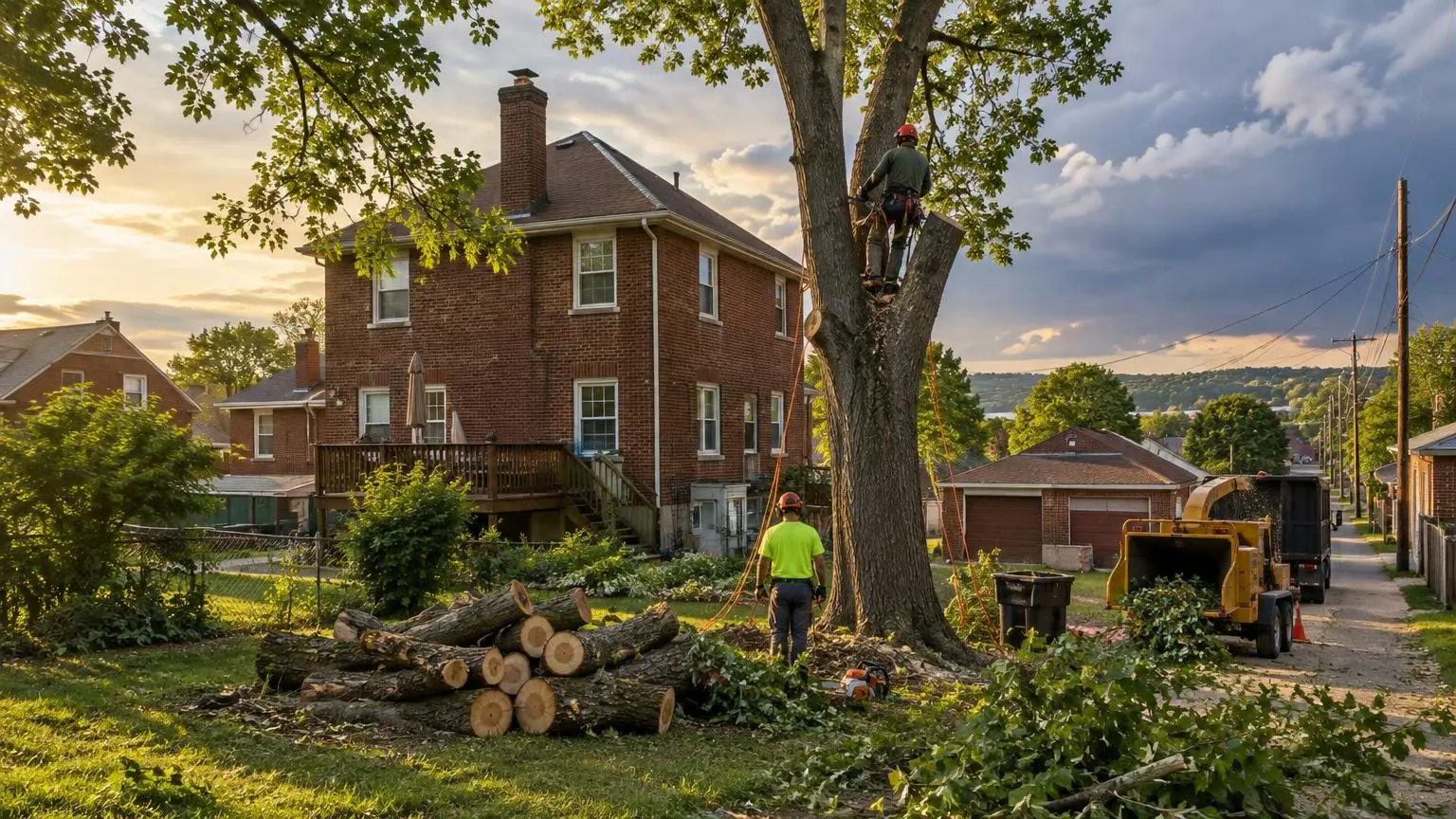
Where the Meramec meets the Mississippi
Tree Removal in Arnold, MO
Trees that have been through record floods, on hills and bottoms above two rivers.
- We come out and look before we price, anywhere in City of St. Louis and St. Louis County
- Each item on the estimate priced on its own
- We confirm where the wood goes before work begins
A City Shaped by Two Rivers
Tree Removal in Arnold often involves trees that have been through serious flooding. Arnold sits where the Meramec River meets the Mississippi, just south of St. Louis County, and it is the most populous community in Jefferson County, with 20,858 residents and 8,847 housing units in 2020. On December 31, 2015, the Meramec crested at a record 47.26 feet at Arnold, affecting more than 300 homes. Less than two years later, on May 3, 2017, it crested again at 45.62 feet. Floods like those do lasting harm to trees, and the effects can take years to show.
What floods do to trees
Floodwater cuts off oxygen to roots, and long floods can kill roots outright. Moving water scours soil away from the base of trees along banks, exposing roots and undermining the trunk. Debris carried by the current batters bark. After the water goes down, a tree can look fine for a season or two, then decline from the root damage. Signs to watch for in trees on low ground:
- Thinning crowns and dieback a year or two after a flood
- Exposed or undercut roots on the river side of the tree
- New leaning, especially toward the water
- Bark damage or cankers at the old high-water line
- Fungal growth at the base, a sign of root decay
Flood-damaged trees near homes should be watched closely and removed if they start to fail.
The hills above the bottoms
Not all of Arnold is low ground. Much of the city is built on rolling hills above the rivers, with homes on slopes and wooded lots. On those properties the concern is different: trees on steep slopes can tip when soils are saturated, and trees at the top of a hill take the brunt of storm winds. We rig and lower trees on slopes rather than felling them, and we keep equipment on stable ground.
Timing work around high water
We do not send equipment onto ground that is still saturated from a flood. Soft soil ruts badly, and banks that have just been scoured can give way under weight. For trees that are an immediate danger to a house or a road, we climb and rig them without bringing heavy machines close. For everything else, it is better to let the ground firm up for a few days, then do the job properly. If floodwater left debris piled against trees or fences, we can clear that at the same time.
Common Arnold jobs
- Removal of flood-damaged or dying trees on low ground
- Hazard trees on slopes above homes
- Dead ash in yards and wooded areas
- Storm cleanup and hung-up limbs
- Stump grinding after removals
Call (314) 668-1571 or send the form to set up a visit. We give written estimates that list exactly what the job includes. Get a free estimate
Arnold and the Meramec
- Record flood. The Meramec River reached a record 47.26 feet at Arnold on December 31, 2015, affecting more than 300 homes, according to Wikipedia's summary of the flood.
- Second major crest. On May 3, 2017, the Meramec crested at 45.62 feet in Arnold. Only southbound I-55 closed that time, and about 20 homes were affected.
- Jefferson County's largest community. Arnold had 20,858 residents and 8,847 housing units, 4.4 percent vacant, in 2020 on about 11.5 square miles of land at the meeting of the Meramec and Mississippi rivers.
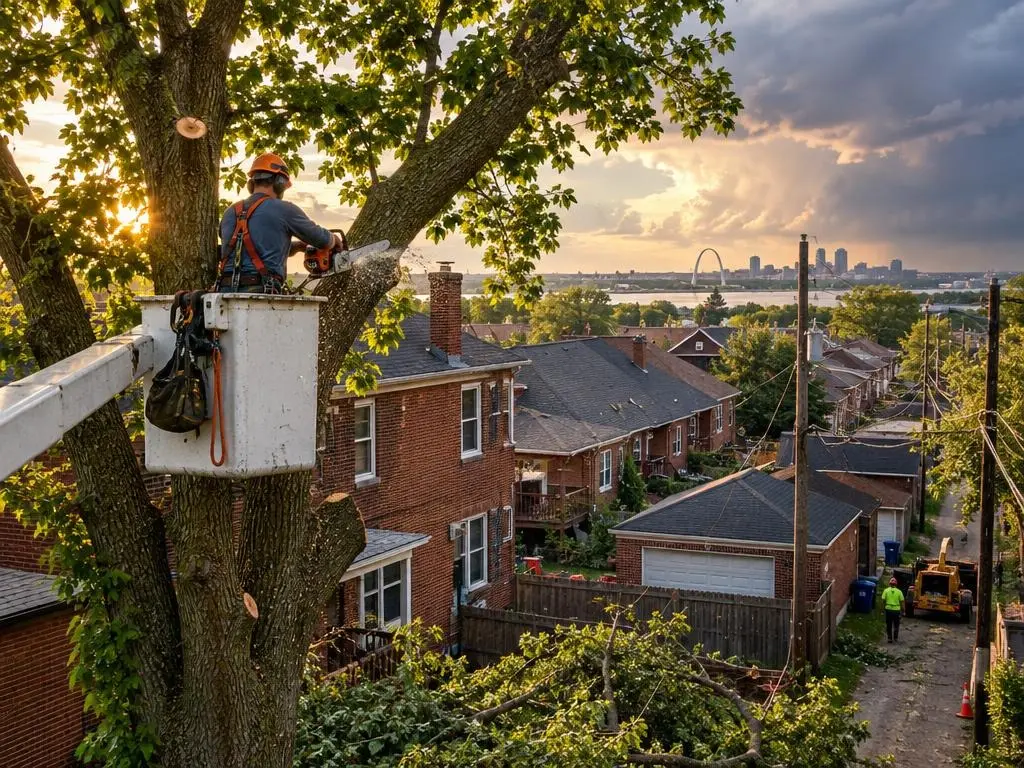
Arnold Questions
Our trees were underwater in the 2015 flood. Are they still safe?
Many survived, but some have been slowly declining since. Look for thinning crowns, dead limbs, fungal growth at the base and leaning. A tree that has gone downhill since the flood should be assessed, especially if it is near the house.
Can you work on a tree right at the riverbank?
Yes, but it takes planning. Banks are soft and often steep, so we usually climb and rig the tree, pulling wood back up to firm ground by rope. We will not put equipment where the bank could give way.
What should I do with wood near the river?
Large logs left in the floodplain can float in the next high water and cause damage downstream. We recommend hauling large wood away. Brush can be chipped and spread or hauled.
Is my tree on the slope behind my house a risk?
It depends on its health, its lean and the soil. Trees on slopes are more likely to tip when the ground is saturated. Cracks in the soil on the uphill side, or a lean that is getting worse, are reasons to call.
Free Estimates in Arnold, MO
Free estimates throughout Arnold, from the bottoms to the hills.
Tree Removal Near Arnold
- Tree Removal in St. Louis, MO
- Tree Removal in Kirkwood, MO
- Tree Removal in University City, MO
- Tree Removal in Clayton, MO
- Tree Removal in Webster Groves, MO
- Tree Removal in Ladue, MO
- Tree Removal in Chesterfield, MO
- Tree Removal in Ballwin, MO
- Tree Removal in Wildwood, MO
- Tree Removal in St. Peters, MO
- Tree Removal in Brentwood, MO
- Tree Removal in Richmond Heights, MO
- Tree Removal in Maplewood, MO
- Tree Removal in Glendale, MO
- Tree Removal in Creve Coeur, MO
- Tree Removal in Town and Country, MO
- Tree Removal in Sunset Hills, MO
- Tree Removal in Crestwood, MO
- Tree Removal in Des Peres, MO
- Tree Removal in Manchester, MO
- Tree Removal in Olivette, MO
- Tree Removal in Maryland Heights, MO
- Tree Removal in Bridgeton, MO
- Tree Removal in Florissant, MO
- Tree Removal in St. Charles, MO
- Tree Removal in O'Fallon, MO
- Tree Removal in Oakville, MO
- Tree Removal in Affton, MO
- Tree Removal in Edwardsville, IL